

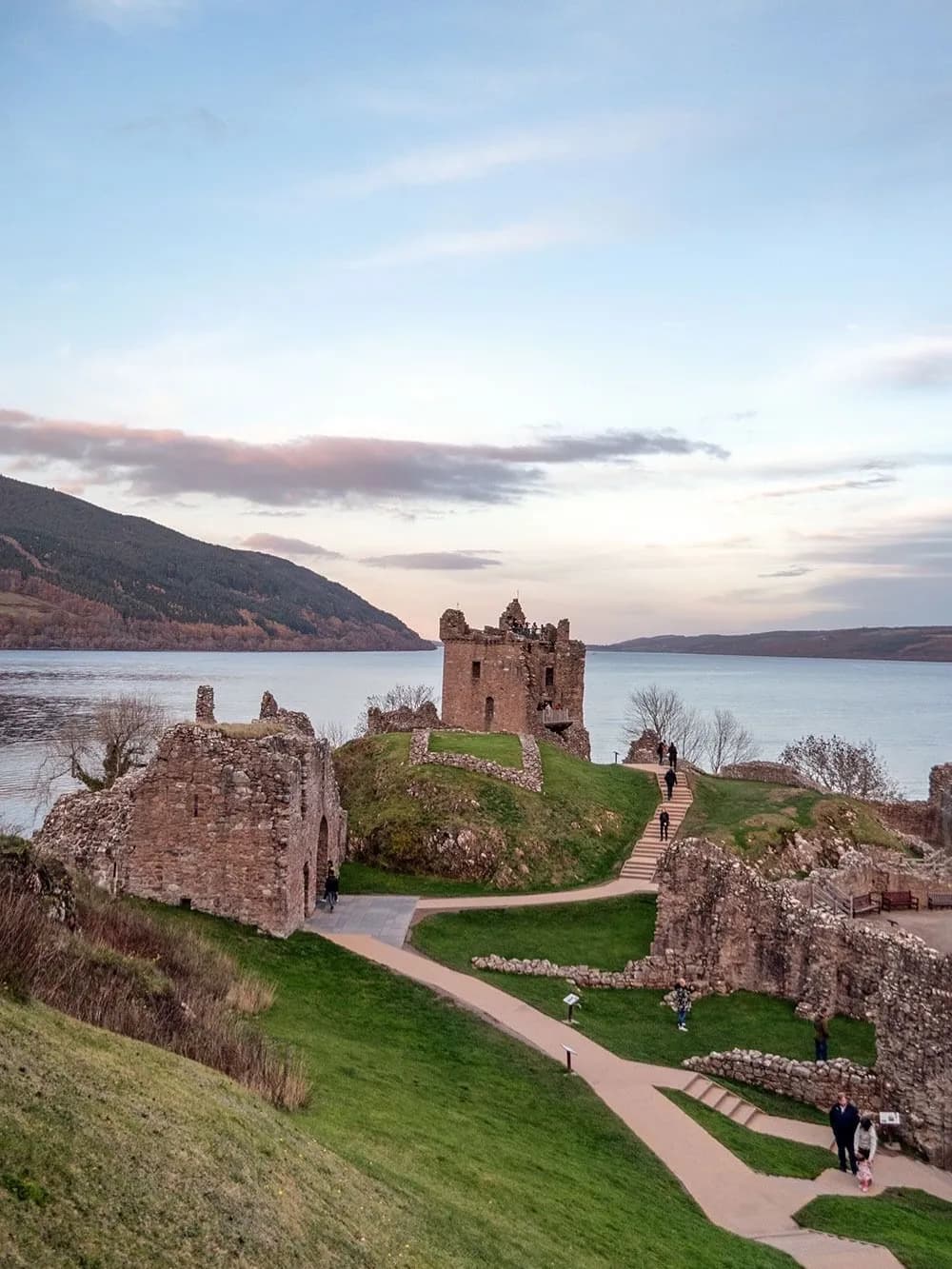
Loch Ness
Loch Ness sits in the Great Glen, a 380-million-year-old fault line that cuts Scotland diagonally from coast to coast. Glaciers carved the loch out of this crack during the last Ice Age, leaving a trench 37km long and up to 230 metres deep. It holds more freshwater than every lake in England and Wales combined, and it never freezes. The first written mention of a creature here comes from a 7th-century biography of St Columba, who supposedly confronted a beast in the River Ness in 565 AD. The modern legend kicked off in 1933 when a new road opened along the shore and sightings exploded. The famous “surgeon’s photograph” from 1934 turned out in 1994 to be a toy submarine with a plastic head stuck on it. A 2018 DNA survey of the loch found no evidence of anything large and unknown — just a lot of eels. Nessie is estimated to contribute around $80 million a year to the Scottish economy, which might be the most honest explanation for why the legend endures. Urquhart Castle ruins sit on the western shore and are one of the best spots for “sightings.“
From @blas.app on Instagram
Related